How to Fix Crawl Errors That Hurt Rankings
- Apr 2
- 4 min read
Crawl errors can quietly hold your website back even when everything else looks solid. You might have strong content, a clean design, and clear service pages, but if search engines run into broken paths or blocked pages, your rankings will suffer. That is why understanding how to fix crawl errors is such an important part of SEO.
When Google cannot properly access your pages, it limits indexing, wastes crawl time, and can reduce your visibility in search results. The good news is that most website crawl errors are fixable with a clear process and regular maintenance.

Table of Contents
What Crawl Errors Are and Why They Matter
A crawl error happens when a search engine bot tries to visit a page but cannot access it properly. This can happen because a page is missing, redirected incorrectly, blocked, or affected by server issues. While a few errors are normal, too many can create problems that impact rankings.
This is where crawl errors hurting rankings becomes a real issue. If Google cannot consistently reach your important pages, it may stop prioritizing them or delay indexing updates. Over time, that reduces visibility and weakens your SEO performance.
Crawlability also plays a role in how efficiently search engines move through your site. If pages are difficult to reach or poorly linked, they are less likely to rank well. That is why a technical SEO audit crawlability review is often needed when performance starts to drop without a clear reason.
Common Website Crawl Errors That Hurt Rankings
Different crawl errors require different fixes, but some show up more often than others. Identifying these early helps prevent larger issues later.
404 errors and missing pages
404 errors occur when a page no longer exists. While some are expected, too many can signal poor maintenance. A proper 404 errors SEO fix usually involves redirecting the URL to a relevant page or restoring valuable content if it was removed too soon.
Redirect errors
Redirect errors SEO issues include redirect loops, chains, or incorrect destination pages. These problems slow down crawling and can prevent search engines from reaching your content efficiently. Each redirect should be direct and intentional.
Broken internal links
Broken links are one of the most common causes of website crawl errors. When your internal links point to missing pages, it creates a poor experience and disrupts crawl flow. The broken links SEO ranking impact includes reduced crawl efficiency and lost authority across your site.
Server and access issues
Server errors like timeouts or 5xx responses tell search engines your site is unreliable. If this happens frequently, Google may reduce how often it crawls your site, which slows down indexing and updates.

How to Fix Crawl Errors That Impact SEO
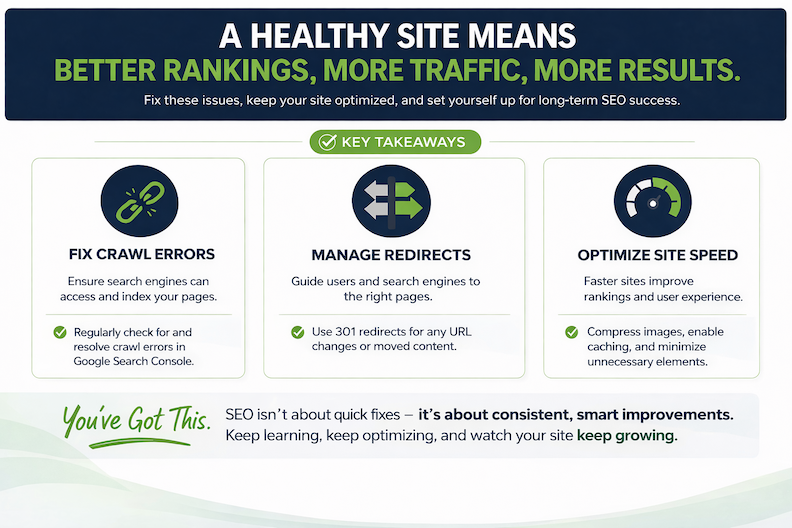
If you want to know how to fix crawl errors, focus on the pages that matter most first. Fixing issues tied to service pages, blog content, and key landing pages will have the biggest impact. Start by reviewing internal links. Update or remove any links that point to outdated or incorrect URLs. If a page still has value from traffic or backlinks, consider restoring it instead of removing it.
Next, clean up redirects. Replace redirect chains with a single 301 redirect that leads directly to the final page. This improves crawl efficiency and prevents wasted time during indexing. You should also review blocked pages. Sometimes important content is accidentally restricted through robots.txt or noindex tags. If a page is meant to rank, make sure it is accessible and included in your site structure.
Finally, address server performance. Slow or unreliable hosting can lead to crawl issues that impact your entire site. Improving load speed and uptime supports better crawlability and overall SEO.
Using Google Search Console to Find Issues
Google Search Console is one of the most useful tools for identifying crawl problems. It provides detailed reports on how Google interacts with your site and highlights Google Search Console crawl errors.
Inside the indexing and pages reports, you can find:
404 errors
Redirect issues
Blocked pages
Server-related crawl problems
This makes it easier to see patterns instead of guessing what is wrong. It also allows you to confirm when fixes are working after Google recrawls your site. Using this tool regularly helps you stay ahead of issues before they begin affecting rankings.
Crawl Budget Optimization and Efficiency
Crawl budget optimization becomes more important as your website grows. Google only spends a certain amount of time crawling your site, so wasted effort on broken or low-value pages can limit how often important pages are updated.
If your site has too many crawl issues, search engines may spend time on errors instead of your best content. This reduces efficiency and can slow down ranking improvements. Improving crawl budget optimization involves fixing crawl errors, removing unnecessary pages, and improving site speed. When your site is easier to navigate, search engines can focus on what matters most.
Preventing Crawl Errors with Better Structure
Fixing crawl issues is important, but preventing them is even more valuable. A well-structured site reduces the chances of errors happening in the first place. Clear navigation and logical URLs make it easier for search engines to move through your content. Internal links should guide users naturally while also helping bots understand page relationships.
Keeping your XML sitemap updated also helps search engines discover new pages and changes more efficiently. When combined with regular audits, this reduces the risk of crawl errors hurting rankings over time. A consistent structure also makes future updates easier. When your site is organized, changes are less likely to create broken links or redirect issues.
Wasatch Digital Group and Technical SEO
At Wasatch Digital Group, technical SEO is approached with a focus on long-term performance rather than quick fixes. Crawl issues often connect to deeper problems with site structure, outdated links, or inconsistent updates, so solving them properly means addressing the root cause.
If your website is dealing with crawl errors hurting rankings or ongoing indexing issues, our services can help identify what is going wrong and fix it with a clear plan. Improving crawlability, cleaning up redirects, and strengthening your site structure can make a measurable difference in how your pages perform. Contact us today and learn how we can fix any crawl errors you have.


Comments